The Penguin That Walked Away
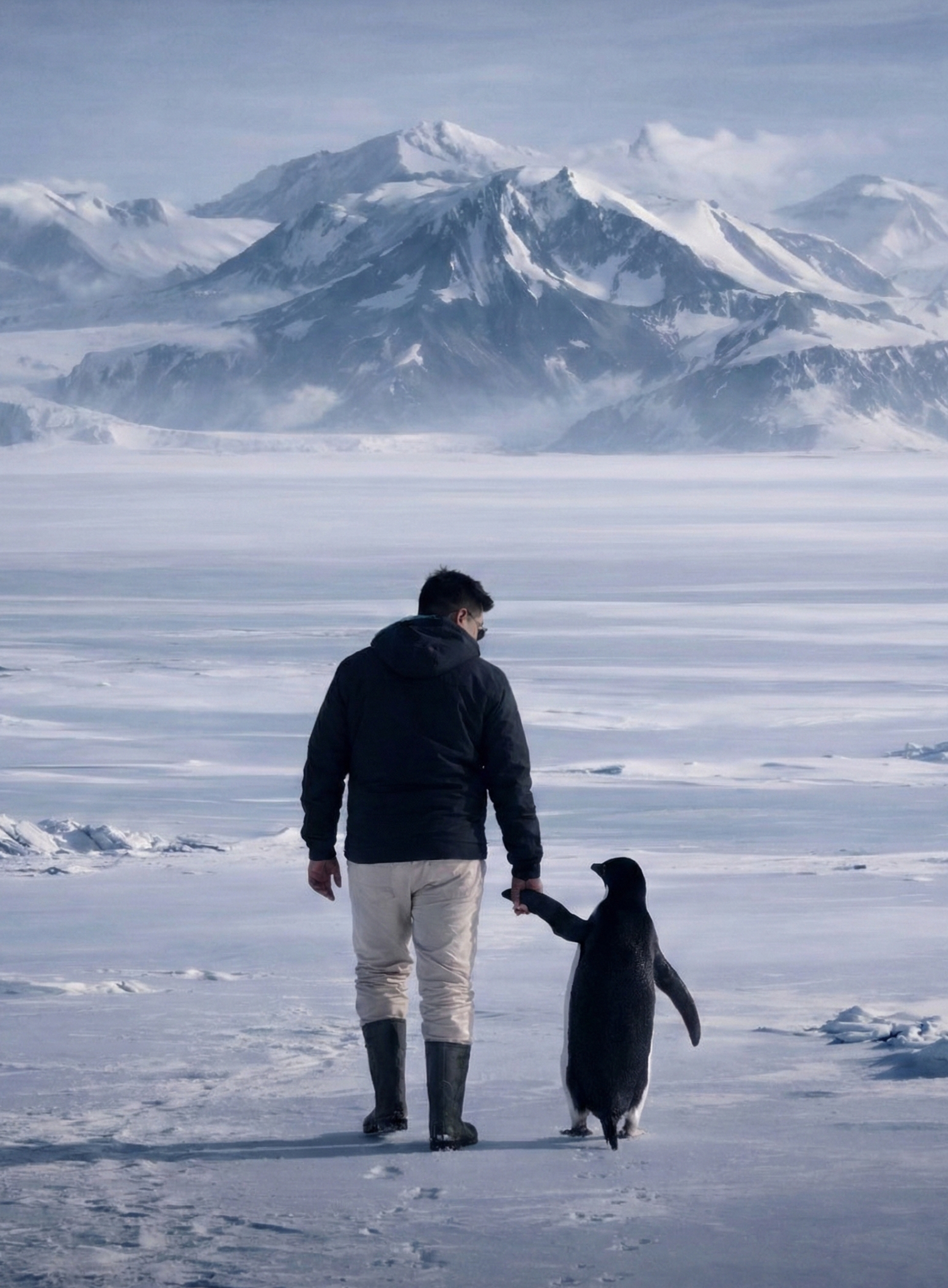
A small penguin walks away from everything it knows. No ocean. No food. No colony. Just endless white ice stretching toward distant mountains. It doesn’t look back. It doesn’t hesitate. It just walks.
This 19-year-old clip broke the internet in January 2026. Millions watched. Millions shared. And somehow, millions saw themselves in that tiny bird marching toward certain death.
They called it the “Nihilist Penguin.” And it became the metaphor of our generation.
Where It All Started
The footage comes from Werner Herzog’s 2007 documentary Encounters at the End of the World. Herzog, being Herzog, didn’t just film Antarctica’s beauty. He captured something darker.
About an hour into the film, his camera finds a lone Adélie penguin. While its colony heads toward the ocean to feed, this one penguin turns inland. Toward the mountains. Roughly 70 kilometers away.
Herzog calls it a “death march.” The penguin won’t survive. There’s no food inland. No shelter. Just ice and inevitable death.
The crew couldn’t intervene. Even if they carried it back to the colony, Herzog explains, it would just turn around and walk toward the mountains again.
Something in that penguin had already decided.
The Viral Explosion
For nearly two decades, this clip lived in the corners of the internet. Film nerds shared it. Documentary lovers discussed it. But it stayed niche.
Then came January 2026.
Someone on TikTok paired the footage with a pipe organ cover of L’Amour Toujours by German organist Andreas Gärtner. The combination was haunting. Religious almost. A tiny creature walking toward oblivion while dramatic organ music swells.
The first viral edit dropped around January 16th. Within days, it had millions of views. Within weeks, the “Nihilist Penguin” was everywhere.
TikTok. Instagram. Twitter. Reddit. Even the White House posted an AI-generated version with President Trump walking alongside the penguin toward Greenland. (Yes, really.)
The meme had escaped containment.
Why Millions Saw Themselves
Here’s what fascinates me. This isn’t a feel-good story. It’s a clip of an animal walking toward death. Yet people didn’t just watch it -they felt it.
The captions tell the story:
“When you’re done with everything.”
“He knows something we don’t.”
“Me walking away from my problems.”
“I am a bird, yet I can’t fly, so I reached for the mountains hoping to touch the sky.”
Why did this resonate so deeply?
Because we’re exhausted.
The internet in 2026 is drowning in conversations about burnout. Quiet quitting. Mental fatigue. The endless pressure to optimize everything -career, fitness, relationships, personal brand. We’re told to hustle harder, network smarter, be more productive.
And here’s this penguin. Not explaining itself. Not asking permission. Not posting about its journey. Just walking away.
That felt like freedom.
The Fantasy of Walking Away
The penguin offered something we desperately want but rarely allow ourselves: a quiet exit.
Not dramatic. Not angry. Not performative. Just calm, deliberate, and absolute.
In a world that demands constant explanation, the penguin explained nothing. It just left.
For people trapped in systems they didn’t choose -grinding jobs, toxic relationships, exhausting social expectations -this penguin became permission. Permission to imagine walking away. Permission to want out.
One viral post juxtaposed two images: a penguin colony (caption: “They lived”) and the lone bird (caption: “He survived”).
Another said: “He lived his life. That’s why he’s remembered.”
We turned a dying animal into a symbol of courage. And maybe that says everything about where we are right now.
The Uncomfortable Truth
Here’s the part nobody wants to hear: The penguin wasn’t being brave.
Scientists who’ve studied this behavior say it’s almost certainly not a philosophical choice. It’s a medical crisis.
Possible explanations include disorientation from environmental disruption, neurological issues or illness affecting navigation, simple navigation errors, or stress during breeding season.
Dr. David Ainley, a marine ecologist interviewed by Herzog, explained that capturing the penguin and returning it to the colony wouldn’t help. It would just turn around and resume its inland march. That’s compulsive behavior, not rebellion.
The penguin wasn’t choosing authenticity over conformity. It was probably dying from neurological failure.
And yet.
The Beautiful Paradox
Here’s what I keep thinking about.
We inspired ourselves through misinterpretation.
The penguin didn’t intend to become a symbol. It wasn’t making a statement. It was suffering. Yet millions of people found meaning, comfort, and even courage in its final walk.
Is that a problem?
Maybe. We’re projecting our struggles onto a suffering animal’s last moments. That’s a little dark when you think about it.
But maybe it’s also profoundly human.
We are meaning-making creatures. We find reflections in mirrors that may not actually show us. And sometimes, that reflection -even distorted -offers exactly what we need in that moment.
The penguin walked toward mountains it couldn’t survive. But in doing so, it gave millions of people drowning in burnout a moment of vicarious freedom.
What We Can Actually Learn
Despite the misinterpretation, there are real lessons here.
Authenticity matters. Whether choosing your own path or accepting hard truths about yourself, living honestly carries weight.
Comfort zones can become prisons. Not all deviation from the norm is fatal. Some leads to discovery.
Burnout is real. The millions who connected with this penguin weren’t being dramatic. They were expressing genuine pain. The desire to walk away isn’t weakness -it’s a signal that something is broken.
We need permission to rest. People found inspiration in walking away because they lack permission to opt out of optimization. A penguin gave them that permission, even vicariously.
Silence can be radical. In a world demanding constant explanation, the penguin’s quiet march felt revolutionary. Not everything requires a narrative.
One Damn Penguin
The viral “Nihilist Penguin” of January 2026 represents one of the internet’s strangest moments. A suffering animal became a symbol of courage. A death march became inspiration. A misinterpretation became meaning.
Is that beautiful or troubling? Probably both.
But here’s what I think.
The penguin walked toward mountains it couldn’t survive. And in doing so, it whispered something to millions of exhausted people:
You don’t have to keep walking the colony’s path. You can turn around. You can walk toward your mountains. You can walk away.
Whether the penguin understood its own power doesn’t matter.
We understood.
And sometimes, that’s enough.